

Most hunting brands do not have a product problem. They have a messaging problem.
Scroll through a handful of hunting, shooting, or outdoor company websites and you will see the same language show up again and again. Built for outdoorsmen. Field tested. Premium quality. Engineered for performance. Designed for the serious hunter.
None of those lines are necessarily wrong. Most of them are just forgettable.
That is the problem. A lot of outdoor brands are saying things that may be technically true, but they are saying them in the same safe, polished, predictable way as everybody else. The result is a market full of companies that look different on the surface but sound almost identical once you start reading.

Customers notice that, even if they do not say it out loud. When every brand claims to be rugged, authentic, premium, and field tested, those words stop carrying weight. They become background noise.
Strong outdoor brand messaging does not come from saying what every other brand says with a slightly different logo attached. It comes from knowing exactly who you are talking to, what they care about, what they are tired of hearing, and why your brand actually deserves their trust.
Safe Messaging Creates Forgettable Brands
Most hunting brands do not set out to sound generic. They usually get there by trying to sound professional.
That is understandable. Nobody wants a brand to feel sloppy, careless, or amateur. The problem is that a lot of companies confuse professionalism with being overly polished. They sand off every rough edge, remove every opinion, soften every claim, and end up with messaging that feels clean but lifeless.
Outdoor customers are not buying from a boardroom mindset. They are hunters, shooters, anglers, landowners, guides, weekend warriors, and everyday people who know the difference between real experience and marketing language.
They trust details. They trust specificity. They trust brands that sound like they have actually been there.
They know what it feels like to freeze in a duck blind, blow a stalk, miss a buck they should have killed, pack meat through deadfall, fight wet gear in bad weather, or carry concealed every day because it is part of their routine. That kind of lived experience creates credibility fast.
Generic language does the opposite.
When a brand talks around the customer instead of speaking directly to what they know, the message starts to feel hollow. It may be polished, but polished does not always mean believable.
Outdoor Customers Can Spot Fake Fast
Authenticity matters in every industry, but it matters even more in hunting, fishing, firearms, and outdoor markets.
These audiences are hard to fool. They know when a product was built by people who understand the use case, and they know when the marketing was written by someone guessing at the culture from the outside. They can feel the difference between a brand that has lived the problem and a brand that is just trying to sell into the category.
That is why storytelling carries so much weight.
Specs matter. Features matter. Materials, construction, fit, durability, and performance all matter. But specs alone rarely make a brand memorable. Stories give those specs meaning.
A customer may forget a generic claim about premium construction, but they will remember the story of the hunt where a piece of gear failed, the lesson that came from it, and the reason a better version had to be built. They will remember the customer problem that shaped the product. They will remember the real moment that made the brand care in the first place.
That is where trust starts.
Not from trying to sound bigger than you are, but from sounding more honest than the brand next to you.
Weak Messaging Makes Good Products Easier to Ignore
A hunting brand can have a great product, strong photography, fair pricing, reliable customer service, and a solid reputation among the people who already know it. It can still struggle if the messaging does not give new customers a clear reason to care.
That is because customers are not only buying products. They are buying identity, confidence, belonging, and proof that a brand understands the way they live.
A saddle, shotgun, holster, base layer, blind bag, pack, or broadhead is never just a product in the customer’s mind. It represents a problem they are trying to solve, a hunt they care about, a risk they want to reduce, or a version of themselves they are working toward.
If your messaging sounds like everybody else, there is no emotional reason to choose you over the next brand. At that point, you are left competing on price, discounts, availability, or whatever ad got in front of the customer last.
That is a bad place to build a brand.
Strong messaging creates separation before the customer ever compares prices. It helps them understand what you stand for, who you are for, and why your product exists. Weak messaging turns you into another option on the shelf.
Storytelling Builds Trust Faster Than Specs Alone
A lot of outdoor companies spend too much time describing what the product is and not enough time explaining why it matters.
There is a difference.
A feature tells the customer what something does. A story shows them why they should care.
Do not just say a jacket is quiet, warm, and water resistant. Talk about the kind of morning it was built for. Talk about sitting still when the wind cuts through the timber. Talk about brushing against frozen stems on the way to a stand. Talk about the problem that made quiet fabric matter in the first place.
Do not just say a holster is comfortable. Talk about carrying it through a full workday, getting in and out of a truck, sitting at dinner, bending over in a store aisle, and forgetting it is there until you need to remember.
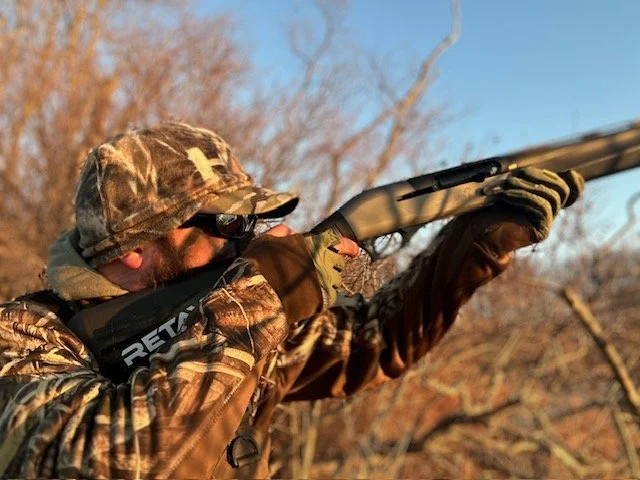
Do not just say a shotgun cycles reliably. Talk about cold hands, wet dogs, muddy fields, and the kind of conditions that expose weak equipment fast.
That is not fluff. That is context.
The more clearly a brand connects product features to real customer outcomes, the easier it becomes for the customer to trust the claim. Good messaging does not replace product quality. It helps people understand why that quality matters.
A Recognizable Brand Voice Creates Familiarity
The strongest outdoor brands are easy to recognize. Not because they are always louder, more aggressive, or more emotional, but because they are consistent.
Their voice feels familiar across the website, emails, product pages, social posts, videos, and ads. The customer does not feel like they are hearing from six different companies depending on the channel. The message holds together.
That consistency builds familiarity, and familiarity builds trust.
A strong brand voice should sound human, clear, experienced, and specific to the audience. It should have enough personality to be remembered and enough discipline to stay useful. The goal is not to impress people with clever lines. The goal is to make customers feel like the brand understands them.
That matters because trust rarely comes from one touchpoint. A customer might find you through a search result, read a product page, watch a video, see a few social posts, sign up for an email, and come back weeks later when they are ready to buy.
If the message changes every time they interact with the brand, trust gets harder to build. If the voice stays steady, the brand starts to feel familiar before the customer ever makes a purchase.
Professional Does Not Have to Mean Boring
There is nothing wrong with being professional. Outdoor brands should be clear, sharp, and trustworthy. But professional does not have to mean sterile.
You can be credible without sounding corporate. You can be polished without sounding fake. You can sell serious products without stripping all personality out of the message.
The best outdoor brands understand that balance. They communicate clearly, but they still sound like they belong in the market. They know when to use technical detail, when to tell a story, when to be direct, and when to let the customer see the people behind the product.
That is where a lot of brands miss the mark. They think being safe protects them. In reality, safe messaging often makes them easier to ignore.
A clear point of view is not a liability. It is one of the few things that can separate a brand in a crowded market.
Final Thoughts
If your hunting brand sounds like every other hunting brand, customers will treat it like every other hunting brand.
That does not mean you need to manufacture controversy, force personality, or turn every product description into a campfire story. It means your messaging needs to be rooted in something real.
Real experience. Real customer problems. Real product purpose. Real language that sounds like it came from people who understand the market they are trying to serve.
Strong outdoor brand messaging makes a company easier to remember, easier to trust, and easier to choose. Generic messaging does the opposite.
The goal is not to sound impressive.
The goal is to sound true.