

Most outdoor brands do not have a content problem. They have a direction problem.
They are making reels, sending emails, paying for photography, writing blogs, posting product shots, and trying to keep up with every platform that seems to matter. From the outside, it looks like activity. Internally, it probably feels like work is getting done.
But six months later, the numbers tell a different story. Traffic is flat. Engagement is inconsistent. Email is not moving product. Social posts get a short bump and then disappear. The brand is busier than ever, but it is not building much that lasts.
That usually means the issue is not effort. It is the absence of a real content system.
The outdoor industry is flooded with content right now. Hunting brands, gear companies, land access platforms, apparel brands, firearm companies, and media personalities are all competing for the same attention. Everyone has a camera. Everyone has a social account. Everyone wants to “build community.”
The brands that separate themselves are not always the ones posting the most. They are the ones building content with a purpose behind it. Their articles, videos, emails, product pages, and social posts all work together to answer questions, earn trust, support sales, and keep people moving deeper into the brand.
Random Posting Does Not Build Momentum
A lot of outdoor companies create content based on what is convenient in the moment.
New inventory comes in, so they post a product photo. Engagement drops, so they run a giveaway. Hunting season opens, so they share field clips. The offseason gets quiet, so they post a quote, a grip-and-grin, or a recycled image from last year.
None of those things are automatically wrong. The problem is that they often do not connect to anything larger.
There is no clear search strategy. No customer journey. No internal linking plan. No educational path that moves someone from a basic question to a confident buying decision. A customer may see a post, like it, and move on, but there is no next step that pulls them deeper into the brand.
That forces the company to keep fighting for attention from scratch. Every week becomes another push to get noticed. Every campaign has to carry more weight than it should. Over time, that turns content into an expense instead of an asset.
Content Creation Is Not the Same as a Content System
Making content and building a content system are two very different things.
Content creation is often reactive. Somebody needs a post for Thursday. A product launch needs an email. A blog needs to go live because the site has been quiet. The team gets something published, checks the box, and moves on.
A content system works differently. It connects the pieces so each one supports the next.
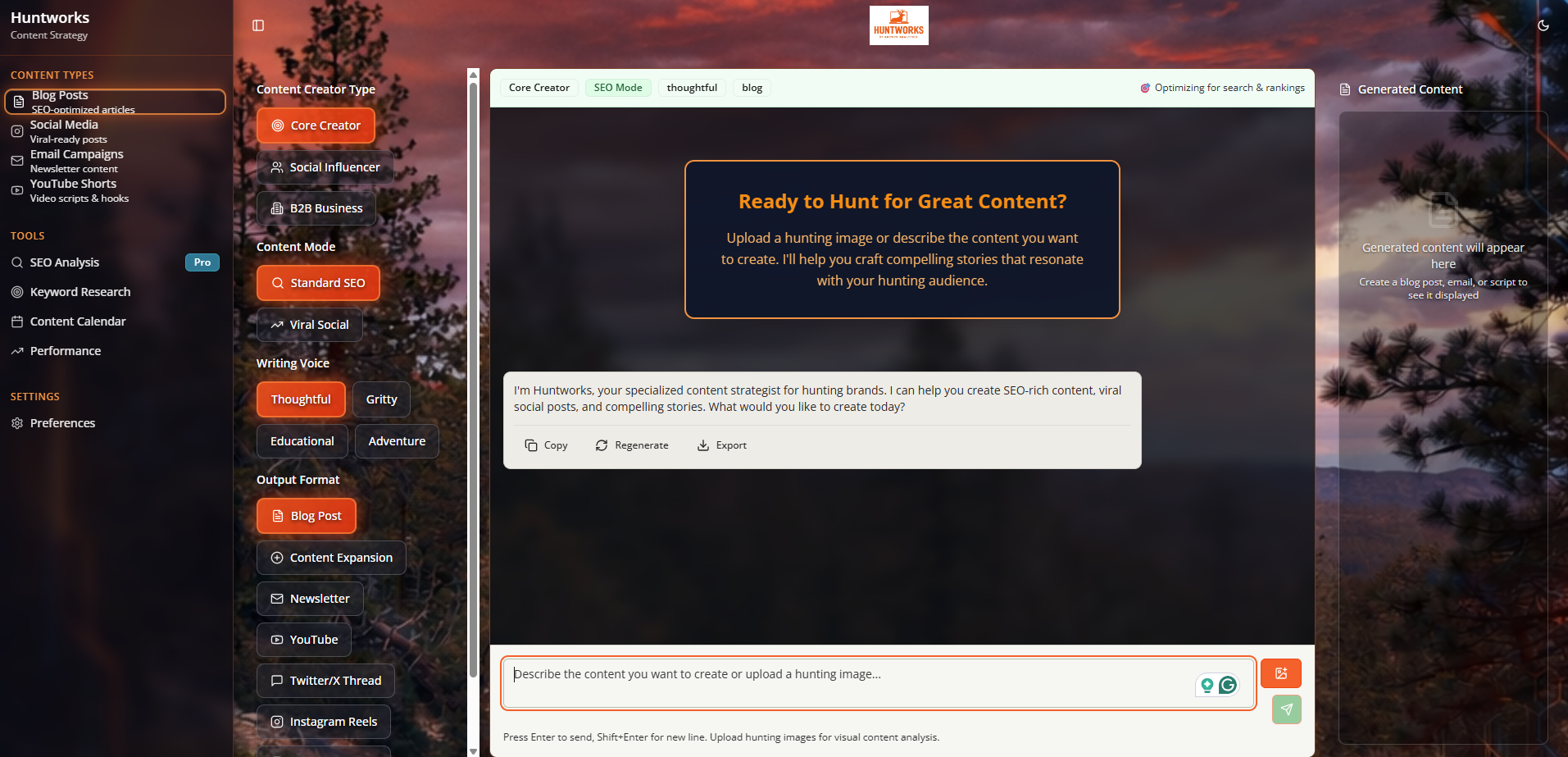
A strong SEO article brings in people who are already searching for answers. That article points them toward a relevant product, guide, comparison, or email signup. The email sequence keeps educating them. The video content reinforces the same message in a more visual way. The product page answers objections that were already introduced higher in the funnel.
That is how outdoor brands stop depending entirely on algorithms and short-term attention. The content starts working together instead of living as a pile of disconnected posts.
SEO Still Matters Because Buyers Still Search
Short-form video gets most of the attention, and for good reason. It can create reach quickly. It can put a product in front of new people. It can show personality, field use, and brand culture in ways a blog never will.
But outdoor buyers still search before they spend money.
Hunters search for saddle hunting setups, public land elk strategies, waterfowl shotgun reviews, concealed carry holster comparisons, turkey choke recommendations, broadhead tuning help, layering systems, boot reviews, and late-season deer tactics.
Those searches matter because they usually come from people with intent. They are not just scrolling. They are trying to solve a problem, compare options, or make a better decision before they buy.
That is why SEO remains one of the strongest long-term channels in the hunting, firearms, and outdoor markets. A well-built article can keep bringing in qualified traffic for years. A social post may create a short burst of attention, but most of that attention fades fast unless it is tied back into a larger system.
Authority Is Built Before It Is Needed
Outdoor brands that win online rarely get there by accident. They build authority before they need the sale.
Every useful article gives the customer another way into the brand. Every ranking keyword creates another discovery point. Every internal link helps organize the site around topics that matter. Every guide, comparison, and how-to piece gives the customer a reason to trust the brand before asking them to buy.
That trust compounds.
At first, the results may not look dramatic. One article ranks. Then another. A few emails perform better. Product pages start getting more qualified visitors. Social content becomes easier to repurpose because the core ideas are already built. Over time, the brand stops acting like it has to chase attention every day and starts owning more of the conversation around its category.
That is the practical value of content strategy. It does not just make a brand look active. It makes the brand easier to find, easier to trust, and easier to buy from.
Consistency Without Direction Burns Money
Consistency matters, but it is not a strategy by itself.
A brand can post five times a week and still go nowhere if the content is not aimed at anything. More posts do not fix weak messaging. More videos do not fix poor site structure. More emails do not fix a lack of customer education.
In fact, more content can make the problem worse when there is no direction behind it. It burns more time, more budget, and more creative energy without building anything that lasts.
The smarter move is not always to create more. It is to build better connections between what already exists.
That means understanding what customers are searching for, what objections stop them from buying, what questions show up before and after purchase, and what content can be reused across blog, email, social, video, and product pages.
When those pieces are aligned, content starts carrying more weight. A blog becomes more than a blog. An email becomes more than a promotion. A product page becomes more than a checkout step. Everything starts doing a job.
The Outdoor Brands Growing Right Now Are Building Systems
The brands gaining ground are not trying to go viral every week. They are building machines.
They are creating systems that attract search traffic, educate customers, support product trust, capture email subscribers, and turn attention into owned audience growth. They understand that attention is useful, but attention by itself is not the prize.
The real prize is a customer who understands the product, trusts the brand, remembers the message, and knows where to go next.
That does not happen through random posting. It happens through content that is planned with a job in mind.
Final Thoughts
If your brand feels busy but not much is growing, the problem probably started before the content was ever published.
It is not always a posting problem. It is often a strategy problem.
The goal is not to make more noise. The goal is to build content that works together, answers real questions, supports the customer journey, and creates value long after the publish date.
Random content disappears.
Strategic content compounds.